Jose Mier, Sun Valley, CA amateur genealogist, ponders how the practice of genealogy as we know it came about. An article on the History Press shines some light on this.
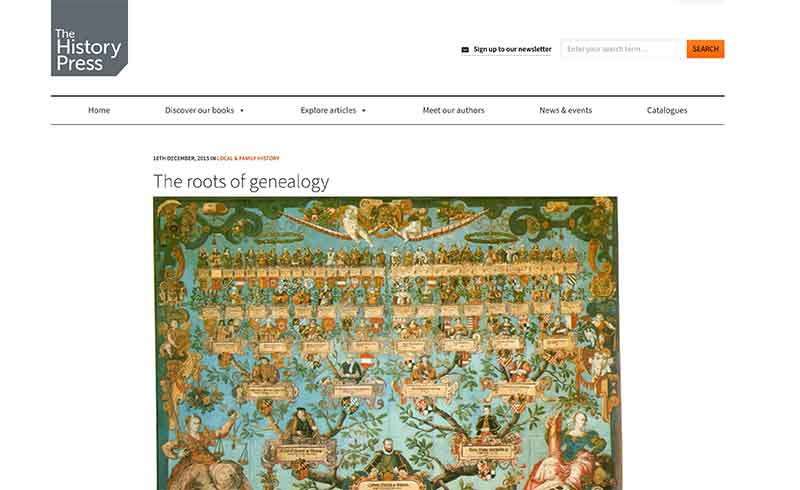
The history of genealogy is deeply intertwined with humanity’s enduring desire to understand identity, lineage, and belonging. Long before genealogy became a formal discipline or popular hobby, people across cultures sought to preserve knowledge of their ancestors for practical, social, religious, and emotional reasons. From ancient oral traditions to modern DNA analysis, genealogy has evolved alongside record-keeping systems, technologies, and social structures, reflecting broader changes in how societies understand family, heritage, and history.
Ancient Origins of Genealogy
Genealogy can be traced back to the earliest civilizations, where lineage was closely tied to power, inheritance, and social order. In ancient Mesopotamia, Egypt, and China, royal and noble families maintained genealogical records to legitimize rule and ensure continuity of leadership. Pharaohs of ancient Egypt, for example, traced their ancestry to divine or semi-divine origins, reinforcing their authority through lineage.
Religious texts also played a central role in early genealogy. The Hebrew Bible contains extensive genealogies, particularly in the books of Genesis, Chronicles, and Matthew, where lineages were used to establish tribal identity and fulfill religious prophecy. These records were not merely historical lists but carried profound spiritual and legal significance, defining rights, responsibilities, and social roles within the community.
Oral Tradition and Early Record Keeping
Before widespread literacy, genealogy was preserved through oral tradition. Elders memorized family lines and recited them during ceremonies, storytelling sessions, or legal disputes. In many Indigenous cultures, oral genealogies served as living histories, connecting individuals to their ancestors, land, and community obligations.
As writing systems developed, oral traditions were gradually supplemented or replaced by written records. Clay tablets, papyrus scrolls, and parchment manuscripts became tools for documenting lineage. These early records were often incomplete and selective, focusing on male lines or prominent families, but they laid the groundwork for more systematic genealogical documentation.
Genealogy in Classical and Medieval Societies
In classical Greece and Rome, genealogy remained important for citizenship, inheritance, and social standing. Roman families maintained stemmata, family trees displayed in homes to demonstrate noble ancestry. These lineages reinforced social hierarchy and political legitimacy.
During the medieval period in Europe, genealogy became closely tied to feudalism and the church. Noble families meticulously documented their ancestry to establish land rights and alliances through marriage. Heraldry emerged as a visual expression of genealogy, with coats of arms symbolizing family identity and lineage.
The Christian church played a crucial role in preserving genealogical information. Parish registers recording baptisms, marriages, and burials became some of the most important genealogical sources. Monasteries and dioceses maintained these records, often with remarkable consistency, providing invaluable data for later generations.
The Rise of Surnames and Family Identity
One of the most significant developments in genealogical history was the adoption of hereditary surnames. While some cultures used patronymics or descriptive names earlier, fixed surnames became more common in Europe between the 11th and 16th centuries. This shift made it easier to track families across generations and locations.
Surnames often reflected occupation, geography, personal characteristics, or ancestry, offering additional clues to family history. The widespread use of surnames marked a turning point in genealogy, transforming it from a privilege of the elite into a practice accessible to broader segments of society.
Early Modern Genealogy and Record Expansion
The early modern period saw significant expansion in record keeping. Governments began conducting censuses, recording taxes, and maintaining legal documents related to property, wills, and court proceedings. These records created new opportunities for tracing family lines beyond church registers.
Genealogy also gained scholarly attention during this period. Antiquarians and historians compiled family histories, often focusing on noble lineages. While these works sometimes contained errors or embellishments, they reflected growing interest in documenting the past systematically.
Colonization and migration further shaped genealogical records. As people moved across continents, they generated new documents such as passenger lists, naturalization papers, and land grants, expanding the scope of genealogical research.
Genealogy in the 19th Century
The 19th century marked a turning point in genealogy as it became more accessible to the general public. Industrialization and urbanization disrupted traditional family structures, increasing interest in ancestral origins. At the same time, improvements in literacy and printing made genealogical publications more widely available.
Civil registration of births, marriages, and deaths became more common, providing standardized records that complemented church registers. Genealogical societies were founded, particularly in Europe and North America, offering resources, publications, and community support for researchers.
This period also saw the emergence of genealogy as a tool for nationalism. Tracing ancestry became a way to reinforce cultural identity and historical continuity, particularly in newly formed or unifying nations.
The Impact of the 20th Century
The 20th century brought both challenges and advancements to genealogy. Wars, political upheaval, and displacement destroyed countless records, creating gaps in family histories. At the same time, governments expanded record-keeping systems, producing extensive documentation of populations.
Technological advancements transformed genealogical research. Microfilm allowed archives to preserve and share records widely, while improved transportation enabled researchers to access distant repositories. Genealogy shifted from an elite pursuit to a popular hobby, especially in countries with strong traditions of family history research.
The rise of social history also influenced genealogy, encouraging researchers to place individual ancestors within broader historical contexts. This approach enriched family narratives, moving beyond names and dates to explore lived experiences.
The Digital Revolution and Online Genealogy
The late 20th and early 21st centuries ushered in a digital revolution that fundamentally reshaped genealogy. Online databases made millions of records searchable from home, dramatically lowering barriers to entry. Digitization projects by archives, churches, and private companies expanded access to census data, parish registers, military records, and more.
Genealogy websites introduced collaborative family trees, allowing researchers to share information and connect with distant relatives. While these tools increased efficiency, they also raised concerns about accuracy and the need for careful source evaluation.
The internet transformed genealogy into a global, interactive practice, fostering communities that transcend geographic boundaries.
DNA Testing and Genetic Genealogy
One of the most significant recent developments in genealogy is the use of DNA testing. Genetic genealogy adds a scientific dimension to traditional research, enabling individuals to confirm relationships, discover unknown relatives, and explore deep ancestral origins.
Autosomal, Y-DNA, and mitochondrial DNA tests each provide different insights into ancestry. While DNA testing has revolutionized genealogical research, it also raises ethical and privacy concerns, prompting ongoing debate within the genealogical community.
Despite these challenges, DNA testing has expanded the scope of genealogy, particularly for individuals with limited paper records or histories affected by adoption, slavery, or migration.
Genealogy Today
Today, genealogy is a multifaceted practice that blends historical research, technology, and personal storytelling. It appeals to people of all ages and backgrounds, driven by curiosity, identity, and the desire for connection.
Modern genealogists draw from a wide range of sources, including traditional documents, oral histories, photographs, and genetic data. Education and ethical standards emphasize accuracy, source citation, and respect for living individuals.
Conclusion
The history of genealogy reflects humanity’s enduring quest to understand where we come from and how we are connected. From ancient lineage lists carved in stone to digital databases and DNA analysis, genealogy has continually adapted to new technologies and social needs.
What began as a tool for power, inheritance, and legitimacy has evolved into a deeply personal and inclusive practice. By tracing family histories, genealogy connects individuals to broader historical narratives, preserving stories that might otherwise be lost. As methods continue to evolve, the study of genealogy remains a vital bridge between past, present, and future generations.