Jose Mier, Sun Valley amateur genealogy expert looks at the surprising history (and genealogy) of fried chicken. About which, more here.
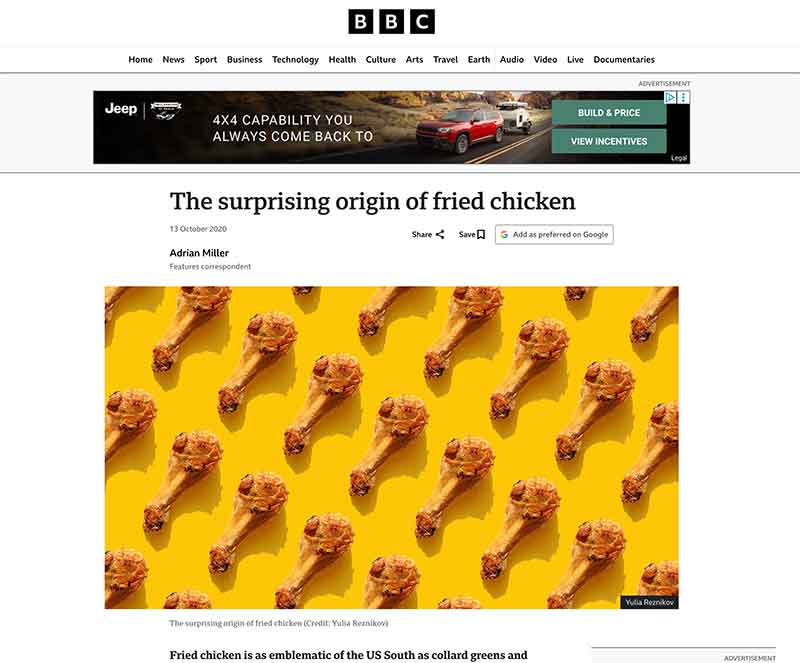
Fried chicken is more than just a beloved comfort food—it is a dish with deep historical roots and a powerful connection to genealogy, culture, and the movement of people across continents and generations. Its story is not confined to a single place or culture; rather, it reflects a blending of culinary traditions that evolved over time, shaped by migration, adaptation, and the lived experiences of families. To understand fried chicken is, in many ways, to explore a broader narrative about history itself—how traditions travel, how they change, and how they become embedded in the identity of communities.
The origins of fried chicken can be traced back to multiple regions, most notably West Africa and Europe. In West African culinary traditions, frying food in palm oil was a common technique long before European contact. Chicken, when available, was often prepared using methods that emphasized bold seasoning and careful cooking to preserve moisture and flavor. These cooking practices were brought to the Americas through the transatlantic slave trade, where enslaved Africans carried with them not only their resilience but also their culinary knowledge. At the same time, Scottish immigrants to the American South had their own tradition of frying chicken, though their method tended to be simpler, often involving lightly floured chicken cooked in fat without heavy seasoning.
It was in the American South that these distinct traditions began to merge. Enslaved Africans, who were often responsible for cooking in both plantation households and their own communities, combined African seasoning techniques with European frying methods. The result was a dish that was richer, more flavorful, and uniquely suited to the ingredients available in the region. Over time, this fusion gave rise to what is now recognized as Southern fried chicken—a dish characterized by its seasoned coating, crisp exterior, and tender, juicy interior.
Fried chicken’s rise in popularity was also influenced by its practicality. Chickens were relatively easy to raise and did not require large amounts of land, making them accessible to families across different economic backgrounds. Frying, meanwhile, was a cooking method that allowed for quick preparation while locking in flavor. This combination made fried chicken an ideal dish for both everyday meals and special occasions. In many communities, it became a centerpiece of gatherings, celebrations, and religious events, reinforcing its role as more than just sustenance.
As fried chicken became more deeply embedded in Southern culture, it also became a symbol of identity and heritage, particularly within African American communities. Recipes were passed down through generations, often without written documentation, relying instead on memory, practice, and shared experience. These recipes became a form of cultural inheritance, linking individuals to their ancestors in a tangible and meaningful way. In this sense, fried chicken is closely tied to genealogy—not just as a food, but as a living expression of family history.
Genealogy, the study of family origins and lineage, often focuses on documents such as birth records, census data, and immigration papers. While these sources are invaluable, they tell only part of the story. Equally important are the traditions, customs, and everyday practices that define a family’s identity. Food is one of the most enduring of these practices. A recipe for fried chicken, handed down from one generation to the next, can serve as a kind of historical record, preserving techniques, flavors, and even stories about the people who created and refined it.
For many families, preparing fried chicken is an act of remembrance. The process itself—seasoning the chicken, dredging it in flour, and frying it to perfection—can evoke memories of parents, grandparents, and other relatives who once stood in the same kitchen. These moments create a sense of continuity, connecting the present to the past in a way that is both immediate and deeply personal. In this way, fried chicken becomes a bridge between generations, embodying the idea that history is not just something to be studied, but something to be experienced.
The connection between fried chicken and genealogy is also evident in the way the dish has evolved over time. As families moved from one region to another, they adapted their recipes to reflect new environments and available ingredients. This process of adaptation mirrors the broader patterns of migration and cultural exchange that genealogy seeks to uncover. For example, a family that moved from the rural South to an urban area might incorporate new spices or cooking techniques into their fried chicken recipe, creating a variation that reflects both their origins and their new surroundings. These changes become part of the family’s story, adding layers of meaning to the dish.
Fried chicken’s historical significance extends beyond individual families to encompass broader social and cultural dynamics. During the 19th and early 20th centuries, African American women often sold fried chicken as a way to earn income, particularly in times when other economic opportunities were limited. This entrepreneurial activity not only helped support families but also contributed to the spread of fried chicken as a popular food across different regions. The dish became associated with resilience, resourcefulness, and the ability to create something meaningful and valuable under challenging circumstances.
As fried chicken gained national and eventually global recognition, it underwent further transformations. The rise of restaurants and fast-food chains brought standardized versions of the dish to a wider audience, sometimes obscuring its complex origins. However, within families and communities, traditional recipes continued to be preserved and celebrated. These recipes serve as a reminder that behind every widely recognized dish is a rich history shaped by countless individuals and their lived experiences.
In recent years, there has been a renewed interest in exploring the cultural and historical roots of foods like fried chicken. This interest often intersects with genealogy, as people seek to understand not only where their ancestors came from, but also how they lived and what they ate. By examining the origins of a dish and tracing its evolution, individuals can gain a deeper appreciation for their heritage and the ways in which it continues to influence their lives.
Fried chicken also highlights the importance of storytelling in preserving history. Recipes are rarely just lists of ingredients and instructions; they are often accompanied by anecdotes, memories, and traditions that give them meaning. A grandmother’s fried chicken recipe might come with stories about family gatherings, holiday meals, or the challenges she faced in her own life. These stories add context and depth, transforming the recipe into a piece of living history. In this way, food becomes a medium through which genealogy is not only recorded but also shared and experienced.
The global spread of fried chicken further underscores its connection to history and genealogy. As people migrated to different parts of the world, they brought their culinary traditions with them, introducing fried chicken to new cultures and communities. Each region adapted the dish to suit local tastes, resulting in a wide variety of interpretations. From Korean fried chicken with its crispy, double-fried coating to Japanese karaage with its light, flavorful batter, these variations reflect the ongoing process of cultural exchange that defines human history.
Despite these differences, the core appeal of fried chicken remains consistent. It is a dish that brings people together, whether at a family dinner, a community event, or a celebration. This communal aspect reinforces its role as a cultural touchstone, one that transcends individual experiences to become part of a shared heritage. In this sense, fried chicken is both deeply personal and broadly universal, embodying the idea that food can connect people across time and space.
In examining the origins of fried chicken and its ties to genealogy, it becomes clear that the dish is far more than a simple culinary creation. It is a reflection of history, shaped by the movements of people and the blending of cultures. It carries within it the stories of those who prepared it, shared it, and passed it down through generations. For many, it serves as a tangible link to the past, a way of honoring ancestors and preserving traditions.
Ultimately, fried chicken’s enduring popularity is a testament to its ability to adapt while retaining its essential character. It has evolved over centuries, influenced by a wide range of cultural and historical factors, yet it remains rooted in the same basic principles of flavor, technique, and tradition. This balance between continuity and change is at the heart of both genealogy and culinary history, reminding us that the past is not static but constantly shaping the present.
As people continue to explore their family histories and seek connections to their heritage, foods like fried chicken will remain an important part of that journey. They offer a way to experience history firsthand, to taste the flavors of the past, and to carry those traditions forward into the future. In doing so, they ensure that the stories of previous generations are not forgotten, but rather kept alive in the kitchens and communities of today.
http://www.jose-mier.comhttps://jose-mier.com/