Jose Mier is a name I enjoy following through family-history records, but genealogy has taught me that a person is much more than a name, a date, or a place. One of the most revealing clues can be the work an ancestor did. When I research family lines from my home in Sun Valley, California, I like to explore occupational records: apprenticeship agreements, guild registers, trade directories, and the documents that trace how people learned a craft and earned a living.
Why an Ancestor’s Occupation Matters
Occupation is more than a label in a census. It can point to a community, a social network, a migration pattern, and sometimes a family relationship. A blacksmith might have worked near a village crossroads; a sailor could have moved between ports; a tailor may have belonged to a guild or learned the trade from a relative. If I find the same occupation repeated across generations, it becomes a thread worth following.
Job descriptions also changed over time. A record might describe someone as a cordwainer, cooper, wheelwright, or mercer—terms that are unfamiliar today. I keep a small glossary and check historical dictionaries rather than assuming the word means what it does in modern usage. The old title can be a clue to the kind of records that survive.
Apprenticeship Indentures: Learning a Trade
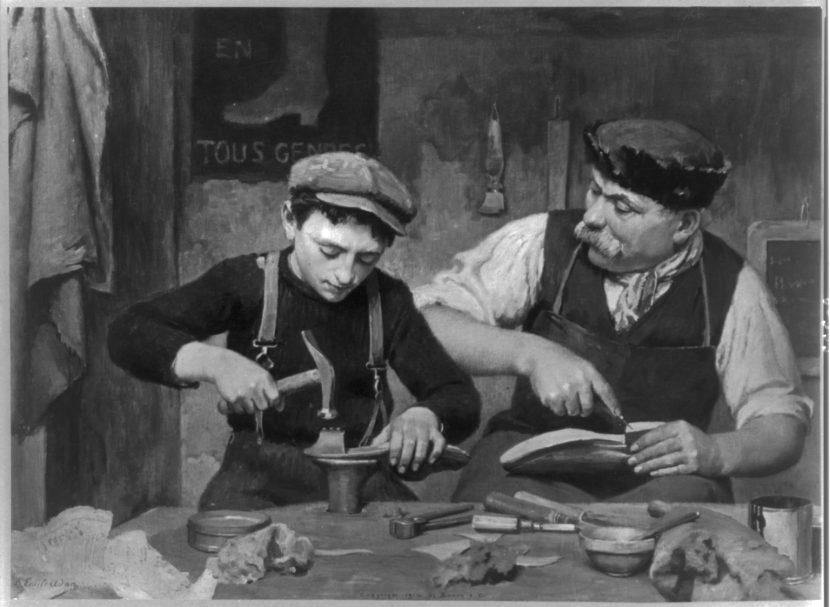
In many places, young people entered formal apprenticeships to learn a skilled occupation. An indenture could name the apprentice, master, parent or guardian, term of service, and sometimes the town or parish. It might specify that the master would provide instruction, clothing, lodging, or other support. These details can connect a child to adults who otherwise appear unrelated in surviving records.
Apprenticeship records are especially useful when a family’s conventional vital records are missing. A parent’s name on an indenture can help distinguish two people with the same name. A master’s address may locate a family in a particular neighborhood. And the age or length of service can help estimate a birth year—though I treat estimates as estimates, not facts.
Records vary widely by country and era. In England and Wales, registers of apprenticeship stamp duty were kept from 1710 to 1811. They do not cover every apprentice: informal training, family-based teaching, and trades outside the relevant rules may leave no such entry. A negative search therefore does not mean an ancestor never apprenticed.
Guilds, Trade Associations, and Freemen
In European towns, guilds and craft organizations often regulated access to trades. Their records could document an apprentice becoming a journeyman, a craftsman seeking admission, or a master establishing a shop. Depending on the place, the register may also mention a father, sponsor, residence, fee, or date of acceptance.
Urban records of “freemen” or guild-brethren can be particularly interesting. Admission might have depended on apprenticeship, family status, marriage, or payment. These registers can reveal how an ancestor entered a town’s professional life and who vouched for him. I look for the archive or municipal library serving the town, then search its catalog using both the modern occupation and historical terms.
Trade Directories and Occupational Listings
Directories are another practical resource. City and county directories may list a person by name, occupation, address, and sometimes employer. Comparing editions can show a move across town, a business opening, or a change in occupation. A directory entry is not proof of a family relationship, but it can help build a timeline and suggest where to search next.
For ancestors who emigrated, directories may also show how a trade transferred to a new country. A person recorded as a shoemaker in one place might appear as a bootmaker or shoe repairer in the United States. Searching variant terms and spelling can prevent me from overlooking a record. I also check whether the directory covered the relevant neighborhood and year before drawing conclusions from an absent name.
How I Build a Reliable Occupational Research Trail
I start with the records I already have and note every occupation exactly as written, including abbreviations. Then I record the source, date, location, and who supplied the information. I search catalogs and archives for likely record groups, using alternate spellings and historic trade names. If a document names a master, employer, or fellow worker, I research that person too—but I avoid assuming that shared work automatically means kinship.
Next, I compare occupational evidence with other records: census schedules, church registers, civil vital records, probate papers, and local histories. The goal is correlation. If several independent sources place the same individual in the same town and trade over time, the case becomes stronger. I note conflicts instead of smoothing them away; an ancestor may have changed careers, held multiple jobs, or been described differently by different enumerators.
For a helpful starting point on archival research, I consult the National Archives guide to apprentices and masters. Its overview explains the kinds of apprenticeship records available and the limits of their coverage. I use such guides to identify record sets, then pursue the original document whenever possible.
From a Job Title to a Family Story
Occupational research can take family history beyond a list of names. It can help explain why an ancestor settled in a particular town, how a family supported itself, or what skills were passed from parent to child. A trade may even illuminate the wider history of a region: textile towns, mining districts, shipbuilding ports, and agricultural communities all shaped the opportunities people had.
As I continue my Jose Mier name searches from Sun Valley, I’m reminded that every clue needs context and careful verification. An old occupation is not the whole story, but it can open a door to records that might otherwise remain hidden. I’m happiest when one modest entry leads to a new document, a new place to investigate, and a fuller picture of the person behind the name.
Watch: Exploring Ancestors’ Occupations
This video offers additional ideas for using occupational clues in family-history research.