Jose Mier is a name I search often, but genealogy has taught me that finding a person is only the beginning. To understand an ancestor, I want to know what daily life looked like: where that person studied, who shared the classroom, what subjects were taught, and whether a school experience shaped the years that followed. One surprisingly useful place to look is the schoolhouse. Old yearbooks, attendance registers, class photographs, and alumni directories can turn a name on a family tree into a much fuller human story. From my home in Sun Valley, California, I enjoy exploring these overlooked sources because they can reveal details that more familiar records never mention.
Why School Records Belong in a Family History Search
School documents are valuable because they were created for ordinary administrative purposes, not necessarily to preserve family history. A school register might list a student’s full name, age, parent or guardian, residence, attendance dates, and sometimes the occupation of a parent. A report card can identify a school year and show which subjects a child studied. Enrollment papers may contain a birth date or the name of the person responsible for the student.
Those details can help distinguish two people with the same name. If I find a Jose Mier in a directory, for example, I still need evidence that he is the right individual. A school record that places a child of the correct age in the same town as a known parent can add a useful piece to the puzzle. It is not proof by itself, but it gives me another fact to compare with census entries, family documents, and other independent sources.
Yearbooks Offer More Than a Familiar Face
Yearbooks are among the most enjoyable school sources to explore. A portrait may provide a photograph of an ancestor that the family never preserved. But I try not to stop at the picture. The surrounding pages can be just as revealing. Senior biographies, club memberships, sports rosters, debate teams, school plays, and student newspaper reports can show interests and friendships.
A young person listed in a music club may have continued playing an instrument as an adult. A student named on an athletic team might appear in a local newspaper account of a championship. A classmate’s name may later turn up as a neighbor, business partner, or witness on a marriage document. These are leads rather than conclusions, but they can suggest new directions for research.
Yearbooks also help establish a timeline. If a relative appears in a school’s 1924 annual but not in the 1925 edition, I would not immediately assume the family moved. The student may have graduated, transferred, or left school for work. I would compare the yearbook with city directories, census schedules, and local newspapers before deciding what happened.
Where to Find Old School Materials
I begin with the place where the ancestor lived and identify the likely school district. Local public libraries and historical societies are excellent starting points. Many preserve yearbooks, commencement programs, class photographs, school newspapers, and anniversary histories. Some materials are cataloged online, while others remain in uncataloged boxes or bound volumes that require a visit or a reference request.
School districts may retain older registers or administrative records, although privacy rules and retention policies vary. County archives, state archives, university special collections, and local museums may also hold school materials. If an ancestor attended college, a university archive could have alumni directories, student publications, commencement programs, or institutional histories. FamilySearch’s guide to school records is a useful starting point for identifying record types and the information they may contain.
I search catalogs using several combinations: the school name, town, county, approximate year, and words such as yearbook, alumni, commencement, attendance, register, or school newspaper. I also search for earlier names of a town or district. School boundaries and institutional names can change, so the school serving a family in 1900 may not have the same name or location today.
Connecting a Student to the Correct Family
Common names demand extra care. A yearbook entry for a person named Jose Mier would catch my attention, but I would not automatically claim that he belongs to my family. I would compare the student’s age, school location, middle name or initials, and any biographical notes with information already established about the individual.
For a stronger identification, I look for a cluster of evidence. A school register might place the student in a particular neighborhood. A city directory could show a household at that address. A census record might identify the parents and siblings. If the same names and locations appear consistently across independent records, the case becomes more persuasive. I keep a note of the source for every fact, including the yearbook page number or archival collection, so I can revisit the evidence later.
It is also important to remember that historical records can contain misspellings. A clerk may have written a surname phonetically, a student may have used a nickname, or a yearbook may have printed an initial instead of a full given name. I search spelling variations and nearby years rather than relying on one exact-name search.
What School Life Can Tell Us About a Community
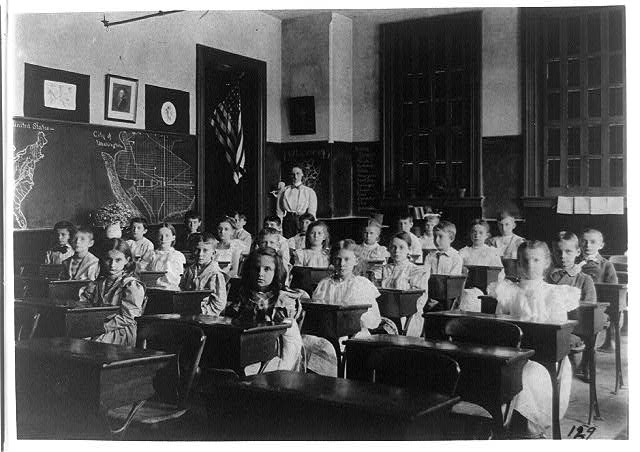
School records can reveal more than an individual’s academic history. They offer a window into the community surrounding the family. A school program might identify teachers, trustees, local donors, and graduating students. A class photograph can show clothing, classroom arrangements, and the size of a school. A student newspaper may describe celebrations, sporting events, fundraisers, or changes in the neighborhood.
For families who moved between countries or regions, school documents can also provide clues about language and adjustment. A child who entered a new school midway through the year may have arrived after a family migration. A record showing a change of district can suggest a move within the same city. These clues should be tested against other records, but they can help build a more detailed chronology.
Here in Sun Valley, I appreciate how local history is often preserved in small collections and personal memories. The same principle applies wherever our ancestors lived: the school that seems ordinary today may have kept the records that help us understand an entire generation.
Preserving the Discovery for the Next Generation
When I find a useful school record, I save a complete citation rather than just downloading an image and moving on. I record the institution, location, academic year, collection name, page or volume, archive, and date I accessed it. I preserve the full page when possible, because names in adjacent entries may later help identify relatives or neighbors. I also note whether the item is an original register, a later transcript, or a published yearbook.
Privacy deserves attention, too. Recent school records may contain information about living people, and archives may restrict access to student files. I follow the repository’s rules and avoid sharing personal details about living individuals without permission.
A Schoolhouse Can Open a New Chapter
Genealogy is often a matter of looking beyond the obvious documents. Birth certificates and census schedules are essential, but they do not tell every part of a person’s story. A yearbook portrait, a teacher’s attendance book, or a short alumni biography can add a face, a friendship, or a new location to the family narrative. For anyone researching a name like Jose Mier, these sources can also help separate one individual from another. I plan to keep school records on my research checklist. Sometimes the next important family clue is waiting in an old classroom photograph or a yearbook that has been sitting quietly on a library shelf for decades.