Jose Mier, careful Sun Valley, CA genealogist, help others avoid the pitfalls inherent in family history research. Videos like this one also help to avoid mistakes.
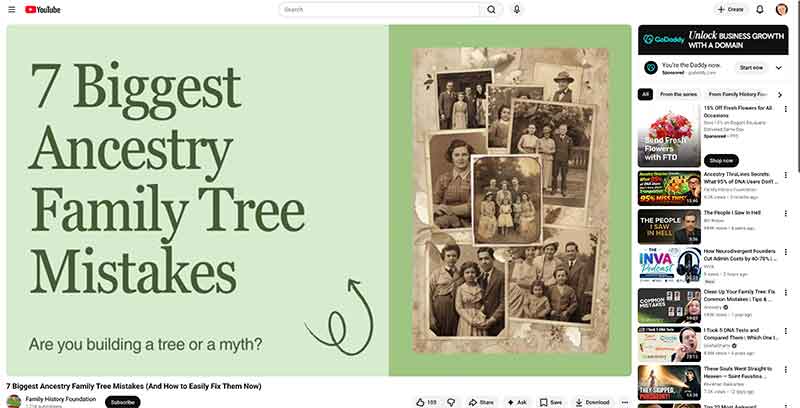
Genealogy is a deeply rewarding pursuit, offering individuals the chance to uncover their roots, connect with past generations, and better understand their place in history. However, it is also a discipline that requires patience, critical thinking, and careful attention to detail. Many people begin their family history journey with enthusiasm, only to encounter pitfalls that can lead to inaccurate conclusions or incomplete research. Understanding the most common mistakes in genealogy can help researchers avoid these errors and build a more accurate and meaningful family tree.
One of the most frequent mistakes is assuming that a record belongs to the correct ancestor simply because the name matches. Names, especially common ones, can appear repeatedly in historical records, sometimes within the same geographic area and time period. Without verifying additional details such as birth dates, family relationships, occupations, and locations, it is easy to attach the wrong record to a person in your tree. This error can quickly compound, leading to entire branches of a family history being built on incorrect assumptions. Careful cross-referencing of multiple sources is essential to confirm identities.
Closely related to this is the tendency to rely too heavily on other people’s online family trees. While these trees can be valuable starting points, they are often compiled by individuals with varying levels of experience and may contain errors that have been copied and repeated many times. Accepting this information without verification can introduce inaccuracies into your own research. It is always best to treat online trees as clues rather than definitive sources, and to seek out original records whenever possible.
Another common mistake is failing to document sources properly. Genealogy is, at its core, a form of research, and like any research, it requires clear documentation of where information comes from. Without proper citations, it becomes difficult to verify findings, revisit sources, or share your work with others. Over time, undocumented information can lose its credibility, and researchers may find themselves unable to distinguish between verified facts and assumptions. Keeping detailed records of sources, including where and when they were accessed, is a fundamental practice in genealogy.
Ignoring the importance of original records is another significant error. While indexes, transcriptions, and summaries can be helpful, they are not always accurate or complete. Transcription errors, omissions, and misinterpretations can all occur, leading to incorrect conclusions. Whenever possible, researchers should seek out original documents such as census records, birth and death certificates, wills, and land deeds. These primary sources provide the most reliable information and often contain details that are not included in secondary sources.
Many beginners also underestimate the impact of name variations and spelling inconsistencies. In the past, spelling was often fluid, and names were recorded as they sounded rather than according to standardized rules. Immigration, language differences, and literacy levels all contributed to variations in how names were written. Failing to consider these variations can result in missed records and incomplete research. Being flexible in search strategies and considering alternative spellings can help uncover valuable information that might otherwise be overlooked.
Another mistake is neglecting the historical context in which ancestors lived. Understanding the social, economic, and political conditions of a particular time and place can provide important insights into family history. For example, migration patterns, wars, and economic opportunities often influenced where people lived and worked. Without this context, researchers may struggle to explain gaps in records or sudden changes in location. Incorporating historical knowledge into genealogical research can help create a more complete and accurate picture of the past.
A related issue is focusing too narrowly on direct ancestors while ignoring collateral relatives such as siblings, cousins, and in-laws. These extended family members can provide valuable clues and help confirm relationships. For example, a sibling’s record might list parents’ names or places of origin that are not mentioned elsewhere. By expanding the scope of research to include the wider family network, genealogists can uncover connections and information that might otherwise remain hidden.
Another common pitfall is jumping to conclusions without पर्याप्त evidence. The excitement of discovering a potential connection can sometimes lead researchers to accept information prematurely. However, genealogy requires a cautious and methodical approach. Each piece of information should be evaluated critically, and conclusions should be based on a preponderance of evidence rather than a single source. Taking the time to verify findings can prevent errors and ensure that the family tree is built on a solid foundation.
Many people also overlook the importance of organization in their research. As family trees grow and the number of sources increases, it can become difficult to keep track of information. Disorganized notes, missing citations, and scattered records can lead to confusion and duplication of effort. Developing a system for organizing documents, whether digital or physical, can greatly improve efficiency and accuracy. This might include using genealogy software, maintaining consistent file naming conventions, and regularly backing up data.
Another mistake is failing to revisit earlier research. As new records become available and research skills improve, it is often worthwhile to review previous findings. Information that was once overlooked or misunderstood may become clearer with additional context or experience. Revisiting earlier work can also help identify and correct errors, ensuring that the family tree remains accurate over time.
Language barriers and unfamiliar terminology can also pose challenges. Historical records may be written in languages that researchers do not understand, or they may use archaic terms that are no longer in common use. Misinterpreting these records can lead to incorrect conclusions. Taking the time to ללמוד basic genealogical terminology and, when necessary, seeking assistance from translators or experts can help overcome these obstacles.
Another frequent error is ignoring DNA evidence or misunderstanding how to use it. Genetic genealogy has become an increasingly important tool, providing insights that traditional records cannot always offer. However, DNA results must be interpreted carefully and in conjunction with documentary evidence. Misinterpreting matches or overestimating the significance of shared DNA can lead to incorrect assumptions about relationships. Understanding the limitations and proper use of DNA testing is essential for integrating it effectively into genealogical research.
Many researchers also underestimate the importance of patience. Genealogy is rarely a quick process, and progress can sometimes be slow. Frustration may lead individuals to take shortcuts or accept incomplete information. However, thorough and accurate research requires time and persistence. Embracing the process and recognizing that each discovery contributes to a larger picture can make the journey more enjoyable and rewarding.
Another mistake is failing to collaborate with others. Genealogy is often a shared endeavor, and connecting with other researchers can provide valuable insights and resources. Relatives, local historians, and genealogy groups may have information or expertise that can کمک fill in gaps. Sharing findings and working together can lead to new discoveries and a deeper understanding of family history.
Privacy considerations are also sometimes overlooked. While researching and sharing family history, it is important to respect the privacy of living individuals. Publishing sensitive information without consent can create ethical and legal issues. Being mindful of what is shared and obtaining permission when necessary helps maintain trust and integrity in genealogical work.
Finally, one of the most significant mistakes is losing sight of the human aspect of genealogy. It is easy to become focused on names, dates, and records, but behind each entry in a family tree is a real person with a unique story. Taking the time to explore these stories—through letters, photographs, and historical context—adds depth and meaning to the research. Genealogy is not just about building a tree; it is about understanding the lives and experiences of those who came before us.
In conclusion, genealogy is a complex and rewarding field that requires careful attention to detail and a commitment to accuracy. By being aware of common mistakes—such as assuming identities based on names, relying on unverified sources, neglecting documentation, and overlooking historical context—researchers can avoid pitfalls and build a more reliable family history. With patience, organization, and a willingness to question assumptions, it is possible to create a genealogical record that not only traces lineage but also honors the stories and experiences of past generations.