Jose Mier, Sun Valley genealogist, says his town reflects the rich diversity that has long defined California, where families from every corner of the globe have established new homes while preserving memories of their ancestral roots. For amateur genealogists like Jose Mier, researching a surname often leads far beyond the place where one currently lives. In the case of the surname Mier, that journey frequently begins in the green mountains of northern Spain before crossing the Atlantic to the Americas. While not every family bearing the name Mier descends from the same ancestral line, the history of Spanish migration provides fascinating insight into how the surname spread across Mexico, the Caribbean, Central America, South America, and eventually the United States.
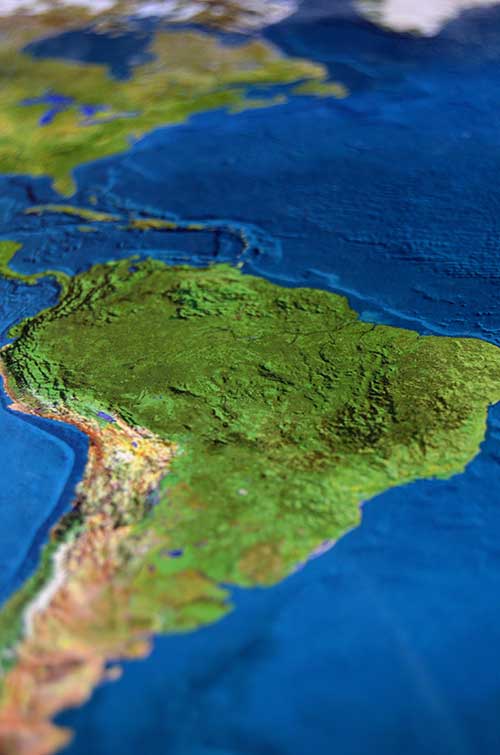
Genealogy is more than tracing names on a family tree. It is also the study of movement—how families responded to changing political, economic, and social conditions by relocating in search of opportunity. Every migration leaves behind a trail of records, and following those records often becomes the key to discovering earlier generations.
For researchers interested in the Mier surname, the story usually begins in northern Spain. The village of Mier, located in the municipality of Peñamellera Alta in Asturias, has existed for centuries among the limestone peaks and river valleys of the Picos de Europa. Like many Spanish villages, it gave rise to a place-based surname. Individuals who left their hometown were frequently identified by their place of origin, becoming known as “de Mier.” Over time, the preposition was often dropped, leaving simply the hereditary surname Mier.
During the late Middle Ages and into the early modern period, Spain underwent dramatic transformation. The unification of the crowns of Castile and Aragon under King Ferdinand II and Queen Isabella I, the completion of the Reconquista in 1492, and the voyages of Christopher Columbus ushered in an era of overseas exploration unlike any the country had experienced before.
As Spain established colonies throughout the Americas, thousands of soldiers, sailors, priests, merchants, artisans, farmers, and administrators crossed the Atlantic. Some sought wealth, while others hoped for land, social advancement, religious missions, or simply a fresh start. Families bearing countless Spanish surnames—including Mier—became part of this migration.
It is important to remember that migration rarely occurred all at once. A family’s journey often unfolded over several generations. One ancestor might relocate from Asturias to Seville, Spain’s principal port for transatlantic commerce during much of the colonial era. A son or grandson might later embark for Mexico, Cuba, Peru, or another Spanish colony. Later generations could continue moving within the Americas, creating family branches in several countries.
One of the earliest destinations for Spanish settlers was New Spain, encompassing much of present-day Mexico and portions of the southwestern United States. Colonial cities such as Mexico City, Puebla, Guadalajara, and Monterrey attracted immigrants from many regions of Spain. Some descendants of northern Spanish families eventually established themselves in these growing communities, where they became merchants, ranchers, craftsmen, military officers, or clergy.
The surname Mier became particularly well known in northeastern Mexico. One notable example is the city of Ciudad Mier in the Mexican state of Tamaulipas. Although the city’s name honors José de Escandón’s associate José de Mier y Terán rather than the Asturian village itself, it illustrates how the surname became firmly established in colonial Spanish America. Researchers should avoid assuming that every Mier family in Mexico descends from the same individual; instead, each lineage must be documented through historical records.
Throughout the colonial period, the Catholic Church remained the principal keeper of vital records. Parish registers documenting baptisms, marriages, and burials exist across much of Latin America and often mirror the detailed records maintained in Spain. These registers allow genealogists to follow families across generations and occasionally back to specific towns in the Iberian Peninsula.
Notarial records provide another valuable resource. Spanish and colonial notaries documented wills, land sales, dowries, business agreements, powers of attorney, and inventories of estates. Such documents often mention spouses, children, siblings, and extended relatives, making them especially useful for reconstructing family networks.
Military service also generated extensive documentation. Spain relied on soldiers to defend its overseas territories, and military records frequently include birthplaces, ages, physical descriptions, and next of kin. Descendants researching the Mier surname may discover that an ancestor served in colonial militias or later national armies throughout Latin America.
The nineteenth century brought new waves of migration. Political upheaval, economic hardship, industrialization, and changing agricultural conditions encouraged many Spaniards to seek opportunities abroad. Unlike earlier colonial migration, these emigrants often traveled to independent nations rather than Spanish territories.
Argentina, Cuba, Uruguay, Venezuela, and Mexico all attracted substantial numbers of Spanish immigrants during the nineteenth century. Some families bearing the surname Mier established successful businesses, entered the professions, or continued farming traditions begun generations earlier in Spain.
Eventually, many descendants made their way to the United States. California, Texas, Florida, New York, and other states became home to growing Spanish and Latin American communities. Immigration records, naturalization papers, passenger manifests, and census schedules now help genealogists trace these later movements.
For researchers in the United States, federal census records are among the most useful sources. Beginning in 1850, American censuses listed every member of a household by name, age, birthplace, and occupation. Later censuses added questions regarding immigration year, citizenship status, and native language, providing valuable clues about a family’s journey.
Passenger lists represent another important resource. Ships arriving in New York, New Orleans, Galveston, San Francisco, and other ports often recorded passengers’ last residences, destinations, and sometimes the names of relatives remaining overseas. These details may provide the critical link connecting an American ancestor to a Spanish hometown.
Naturalization records can be equally informative. Petitioners frequently identified their place of birth with remarkable precision, occasionally naming the exact municipality or province where they were born. Such specificity may guide researchers directly to parish records in Asturias or elsewhere in Spain.
Modern DNA testing has transformed migration research by connecting distant relatives separated by oceans and centuries. Autosomal DNA tests identify cousins across multiple family lines, while Y-DNA projects sometimes reveal whether paternal surname branches share a common ancestor. For individuals researching the Mier surname, genetic matches in Spain, Mexico, Colombia, Puerto Rico, or the United States may provide valuable clues that traditional records alone could not uncover.
Nevertheless, DNA should always complement documentary research rather than replace it. Shared genetic segments indicate a biological relationship but cannot identify a specific ancestor without supporting historical evidence. The strongest genealogical conclusions combine both forms of research.
Heritage travel has also become an increasingly popular extension of family history research. Descendants of Spanish immigrants often visit Asturias to experience the landscapes their ancestors once knew before continuing to cities and regions where later generations settled in the Americas. Walking through a village church in northern Spain and then visiting a colonial cathedral in Mexico or a historic plaza in Texas illustrates the remarkable geographic journey one family may have taken over several centuries.
Researchers should remember that migration was not always voluntary or easy. Economic pressures, crop failures, political conflicts, military service, and family obligations often influenced decisions to emigrate. Leaving one’s homeland meant saying goodbye to familiar landscapes, relatives, customs, and sometimes even language. Appreciating these challenges adds emotional depth to genealogical research and reminds us that every immigrant story reflects courage and resilience.
Another important lesson for genealogists is avoiding assumptions based solely on surnames. The presence of the name Mier in two countries does not automatically establish a close relationship between the families involved. Independent migration, adoption of place-based surnames, and incomplete historical records require careful analysis of every generation. Reliable genealogy depends upon documented evidence rather than speculation.
Fortunately, technology has made international research easier than ever before. Digitized archives, searchable databases, online historical newspapers, collaborative family trees, and virtual access to archives allow researchers to work across continents from their own homes. While visiting archives in person remains valuable, many important discoveries can now be made from a computer.
For Jose Mier in Sun Valley, following the Mier surname across the Atlantic illustrates one of genealogy’s greatest rewards: discovering how ordinary families participated in extraordinary historical events. The story of migration is not simply about maps and ships. It is about parents seeking better lives for their children, young adults pursuing opportunity, and communities adapting to unfamiliar environments while preserving cherished traditions.
Whether the journey led from Asturias to Mexico, from Spain to Cuba, from Colombia to California, or through several countries over many generations, each move became another chapter in the family’s history. Every passenger list, baptismal register, census record, and immigration file helps reconstruct that remarkable journey.
Today, descendants of families named Mier live throughout the world, connected by a shared surname but often separated by centuries of independent history. Genealogy allows those scattered branches to rediscover common heritage while appreciating the unique paths each family followed. For many researchers, that search begins with a small village in northern Spain and continues across the Americas, one historical record at a time.
To Find Out More
The CEMLA (Centro de Estudios Migratorios Latinoamericanos) database is an outstanding resource for researching immigrants who arrived in Latin America, particularly Argentina, and provides valuable context for Spanish migration to the Americas: https://cemla.com/buscador/