Jose Mier (yours truly) says Sun Valley has become home to many people whose family histories stretch across continents, and for amateur genealogists like Jose Mier, tracing a surname back to its earliest known roots is both a rewarding hobby and a fascinating journey into history. Among the many names that have captured the imagination of family historians, the surname Mier holds a particularly intriguing connection to northern Spain. Nestled in the rugged mountains of the Principality of Asturias is the tiny village of Mier, a place that many researchers believe is closely associated with the origin of the surname. While not every family bearing the name Mier necessarily descends directly from this village, it remains one of the most compelling places to begin exploring the history behind the name.
The village of Mier is located within the municipality of Peñamellera Alta in eastern Asturias, close to the border with Cantabria. Surrounded by limestone mountains, lush forests, and winding rivers, it sits within one of Spain’s most scenic landscapes. This region forms part of the Picos de Europa, an area renowned for its dramatic peaks, deep gorges, and centuries-old villages. Long before modern roads reached these mountain communities, families here relied on farming, livestock, and close-knit village life.
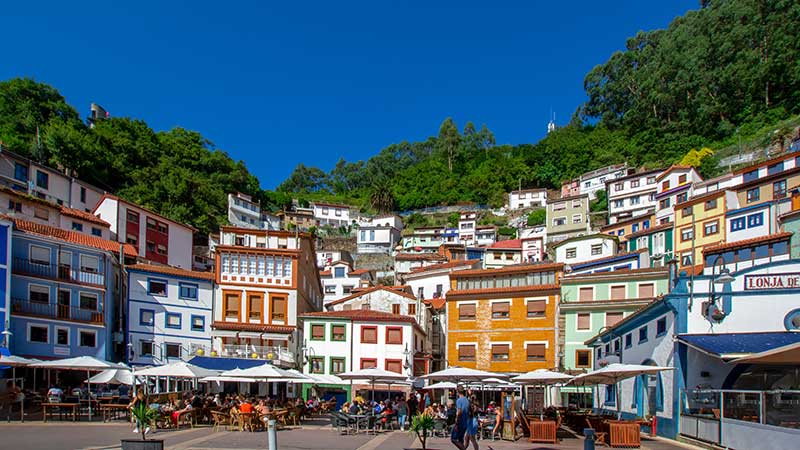
For genealogists, villages like Mier are particularly important because many Spanish surnames originated as place names. During the Middle Ages, it became increasingly common for individuals who moved away from their birthplace to be identified by their place of origin. Someone leaving the village of Mier for another town might be known as “de Mier,” meaning “from Mier.” Over generations, the “de” was often dropped, leaving simply the surname Mier.
This pattern occurred throughout Spain and much of Europe. Surnames such as Navarro, Toledo, Valencia, and Zamora similarly reflect geographic origins. Understanding this naming tradition helps explain why small villages could give rise to surnames that eventually spread across entire continents.
Asturias itself occupies a unique place in Spanish history. During the eighth century, after much of the Iberian Peninsula came under Muslim rule, the Kingdom of Asturias emerged as the first Christian kingdom to successfully resist conquest. The famous Battle of Covadonga, traditionally dated to 722, marked the beginning of what later became known as the Reconquista. Although historians continue to debate details surrounding the battle, Asturias has long celebrated its role in preserving Christian rule in northern Spain.
Throughout the Middle Ages, Asturian communities remained relatively isolated due to their mountainous geography. This isolation contributed to the preservation of local customs, dialects, and family lineages. Parish churches became the centers of community life, recording baptisms, marriages, and burials that today provide invaluable resources for genealogists.
For researchers investigating the Mier surname, parish records often represent the most important historical documents available. Many Catholic parishes maintained meticulous registers for centuries, allowing descendants to reconstruct family trees extending back hundreds of years. These records frequently identify parents, grandparents, occupations, and neighboring families, painting a vivid picture of village life.
Another valuable resource is Spain’s historical archive system. The Portal de Archivos Españoles (PARES) provides access to millions of digitized historical documents, including census records, military files, legal proceedings, maps, and notarial records. Researchers interested in the Mier surname may discover references to individuals who lived in Asturias or who later migrated elsewhere in Spain or the Americas.
Migration has played a significant role in spreading the Mier surname far beyond northern Spain. Beginning in the sixteenth century, many Spaniards crossed the Atlantic to participate in exploration, trade, military service, and colonial administration. Others emigrated during the nineteenth and early twentieth centuries in search of economic opportunity.
Today, families bearing the surname Mier can be found throughout Mexico, Colombia, Argentina, Cuba, Puerto Rico, the United States, and many other countries. Although these families may not all descend from the same ancestral line, many share historical ties to northern Spain.
Traveling to Asturias can be an unforgettable experience for anyone researching the Mier surname. Unlike larger tourist destinations such as Madrid or Barcelona, Asturias offers a quieter glimpse into traditional Spanish culture. Visitors encounter green valleys instead of arid plains, cider houses instead of tapas bars on every corner, and mountain villages whose appearance has changed surprisingly little over the centuries.
A trip to the village of Mier allows family historians to appreciate the environment their distant ancestors may have known. Walking narrow stone streets, listening to church bells echo across the valley, and observing traditional farmhouses provides context that cannot be gained from historical documents alone.
Genealogical travel often transforms research into something deeply personal. Rather than merely collecting names and dates, travelers gain insight into geography, architecture, cuisine, climate, and daily life. Understanding these factors helps explain why ancestors made certain decisions, including whether to remain in their homeland or seek new opportunities abroad.
Modern genealogy also combines historical research with technology. DNA testing has enabled individuals bearing the Mier surname to discover relatives across the globe. While DNA results cannot identify a specific village of origin on their own, they frequently reveal shared ancestry among individuals whose paper records eventually converge in northern Spain.
Researchers should remember that surnames alone do not prove close biological relationships. The same surname may have developed independently in multiple locations, or families may have adopted surnames through marriage, inheritance, or other historical circumstances. Successful genealogy depends upon combining documentary evidence with genetic data whenever possible.
Local history societies throughout Asturias continue to preserve regional heritage. Museums, municipal archives, and parish offices may contain photographs, land records, oral histories, and publications unavailable elsewhere. Establishing contact with local historians can sometimes uncover information that has never been digitized.
For residents of Sun Valley like Jose Mier, exploring the origins of the Mier surname demonstrates how genealogy connects individuals across time and geography. A simple family name can lead researchers from California to a mountain village in northern Spain, revealing stories of migration, resilience, and community along the way.
Whether your ancestors remained in Asturias for centuries or eventually crossed oceans to build new lives, understanding the historical setting of the village of Mier enriches every branch of a family tree. Even when definitive proof remains elusive, learning about the region provides valuable context for interpreting historical records and appreciating the lives of earlier generations.
Every genealogical journey begins with curiosity. For those fortunate enough to bear the surname Mier, that journey naturally points toward the green mountains of Asturias—a region whose history continues to inspire researchers around the world.
If You Want To Read More
The official tourism website for Asturias offers historical information, travel resources, maps, and cultural highlights that are useful for anyone planning a heritage trip to the region: https://www.turismoasturias.es/en