Jose Mier: Sun Valley is home to people from countless backgrounds, each with a unique family history waiting to be uncovered. For amateur genealogists like Jose Mier, one of the most fascinating aspects of research is discovering where a surname originated and how it spread across continents over hundreds of years. The surname Mier is especially interesting because it appears to have deep historical ties to northern Spain, particularly the mountainous region of Asturias, where a small village named Mier has existed for centuries. Although proving a direct ancestral connection requires careful research, studying the history of the surname provides valuable clues and opens the door to a richer understanding of family heritage.
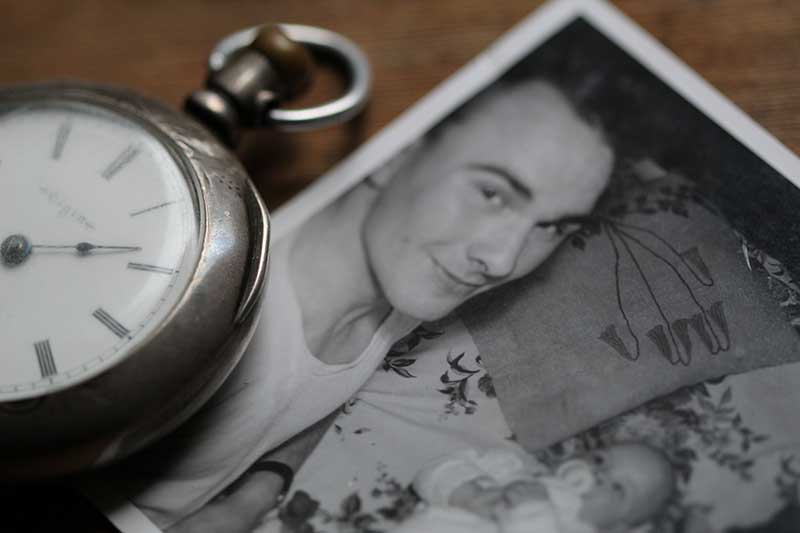
Genealogists often begin with a simple question: where did a family name come from? In many cases, the answer lies in geography. Across medieval Europe, surnames evolved as populations grew and communities needed better ways to distinguish individuals with the same given name. One of the most common solutions was to identify people by the place they came from.
Someone who left the village of Mier to settle in another community might be known as “Juan de Mier,” literally meaning “John from Mier.” Over generations, the “de” frequently disappeared, leaving the inherited surname Mier. This pattern was common throughout Spain and explains why so many Spanish surnames correspond to towns, rivers, valleys, or regions.
The village of Mier itself is located in the municipality of Peñamellera Alta in eastern Asturias, a rugged landscape bordering the autonomous community of Cantabria. The area is characterized by limestone mountains, narrow valleys, rushing rivers, and dense forests. Because the terrain made travel difficult for centuries, many villages remained relatively isolated, allowing families to establish roots that stretched back many generations.
Asturias occupies a special place in Spanish history. Following the Muslim conquest of much of the Iberian Peninsula in the eighth century, Christian resistance took hold in the mountains of the north. The Kingdom of Asturias became the first enduring Christian kingdom after the conquest and laid the foundation for the later kingdoms that gradually reclaimed territory during the Reconquista.
This long history means that parish churches, monasteries, and local governments in Asturias accumulated records over many centuries. For genealogists researching surnames like Mier, these records are invaluable. Baptismal registers, marriage records, burial entries, wills, land transfers, and tax rolls often survive in local archives or diocesan collections, providing a remarkable window into the lives of ordinary families.
One of the first lessons every family historian learns is that surnames are not static. Spelling variations are common, particularly before standardized spelling became widespread. Clerks wrote names phonetically, and literacy rates varied considerably. Researchers studying the Mier surname should therefore remain open to encountering minor spelling differences in historical records, especially when searching handwritten documents.
It is also important to recognize that not every person named Mier descends from a single ancestral family. Toponymic surnames—those derived from place names—could arise independently whenever someone adopted the name of a hometown. Two unrelated families who both left the village of Mier generations apart might eventually share the surname without sharing a recent common ancestor. This is why careful documentation remains essential.
Genealogical research typically begins at home. Birth certificates, marriage licenses, family Bibles, old photographs, letters, military papers, and immigration documents all provide clues that can help bridge the gap between modern generations and historical records overseas. Interviewing older relatives is equally valuable. Stories that seem insignificant today may later provide critical evidence about places of origin, occupations, or family relationships.
Once researchers identify an ancestor who emigrated from Spain, the search often shifts to passenger lists, naturalization records, and census schedules. These documents sometimes identify the immigrant’s specific hometown rather than simply listing “Spain” as the birthplace. Finding that single place name can transform an otherwise difficult research project into a focused investigation.
Many descendants of Spanish immigrants are surprised to learn how detailed Spanish parish records can be. Catholic clergy meticulously recorded baptisms, confirmations, marriages, and burials for centuries. These registers frequently include the names of parents, grandparents, godparents, occupations, and even neighboring villages. Such information allows genealogists to reconstruct entire family networks rather than merely tracing direct ancestors.
Another valuable source consists of notarial records. Spanish notaries documented property transactions, wills, marriage agreements, business contracts, and legal disputes. These records often reveal relationships between extended family members and provide insights into daily life that parish registers alone cannot supply.
Military records can also prove useful. Throughout Spanish history, military service generated extensive documentation, particularly during the eighteenth and nineteenth centuries. Pension applications, enlistment papers, and service records sometimes identify birthplaces and family members, providing additional evidence for genealogical research.
The surname Mier eventually spread well beyond Spain. During the colonial period, Spaniards established settlements throughout the Americas, and many families bearing northern Spanish surnames relocated to present-day Mexico, Central America, South America, and the Caribbean. Later waves of migration during the nineteenth and early twentieth centuries brought additional families to the United States and elsewhere.
Today, researchers can connect with other people named Mier through online genealogy communities, DNA testing services, and collaborative family tree projects. These resources should be approached thoughtfully. While online family trees can provide useful clues, every claim should be verified with original records whenever possible. Errors can easily spread when researchers copy unsupported information from one tree to another.
DNA testing has become an increasingly valuable complement to traditional genealogy. Autosomal DNA tests can identify genetic cousins across multiple family lines, while Y-DNA testing—available only to males—can sometimes help trace paternal surname lineages. Because surnames often pass from father to son in many cultures, Y-DNA projects occasionally reveal whether different branches of a surname are closely related. Even so, DNA should be viewed as supporting evidence rather than a replacement for documentary research.
One of the greatest rewards of studying the Mier surname is the opportunity to explore Asturias itself. Heritage travel has become increasingly popular as genealogists seek to experience the places where their ancestors once lived. Visitors to eastern Asturias discover charming stone villages, Romanesque churches, winding mountain roads, traditional cider houses, and spectacular scenery within the Picos de Europa National Park.
Walking through villages that have existed for centuries gives researchers a deeper appreciation for the historical environment their ancestors knew. Ancient churches, narrow lanes, and agricultural landscapes help transform names found in parish registers into real places inhabited by real people.
Travel also encourages conversations with local residents, archivists, and historians who may possess knowledge unavailable online. Small municipal archives occasionally preserve photographs, municipal censuses, land records, or local histories that have never been digitized. Even when language differences present challenges, many archivists welcome respectful inquiries from descendants interested in learning about their heritage.
For Jose Mier in Sun Valley, researching the origins of the Mier surname is about more than satisfying curiosity. Genealogy connects generations, strengthens family identity, and preserves stories that might otherwise disappear. Every document uncovered, every historical map consulted, and every ancestral village visited contributes to a richer understanding of one’s place in history.
Although tracing a surname back several centuries requires patience, persistence, and careful analysis, the journey itself is often as rewarding as the destination. Whether your Mier ancestors remained in Asturias, crossed the Atlantic centuries ago, or arrived in the United States more recently, each discovery adds another chapter to an ongoing family story.
For anyone bearing the surname Mier, the green mountains of northern Spain provide a meaningful starting point. They remind us that behind every family name lies a landscape, a community, and generations of people whose lives shaped the present. Exploring those connections is one of genealogy’s greatest rewards.
External Resource
FamilySearch offers free guidance on researching Spanish genealogy, including parish records, civil registrations, and historical collections: https://www.familysearch.org/en/wiki/Spain_Genealogy