Jose Mier (your friendly neighborhood genealogist—sort of) knows Sun Valley is home to people with family histories that stretch across continents, and for amateur genealogists like Jose Mier, few discoveries generate more excitement than finding a possible coat of arms associated with a family surname. A quick internet search for “Mier family crest” produces dozens of colorful shields, elaborate helmets, and ornate scrolls, often accompanied by claims that they represent every person bearing the surname. While these images are visually appealing, the reality of Spanish heraldry is far more complex and considerably more interesting. For anyone researching the surname Mier, understanding how heraldry developed—and how it differs from genealogy—is essential to separating historical fact from modern marketing.
Many people assume that every surname has a single official coat of arms that belongs to everyone sharing that name. This misconception is widespread, especially because numerous commercial websites sell plaques, jewelry, and artwork featuring “family crests” tied to common surnames. In truth, coats of arms were generally granted to specific individuals or particular family lineages rather than to an entire surname.
Understanding this distinction is one of the first lessons serious genealogists learn. The fact that a historical individual named Mier possessed a coat of arms does not automatically mean that every modern person with the surname Mier descends from that individual or has the right to use the same heraldic design.
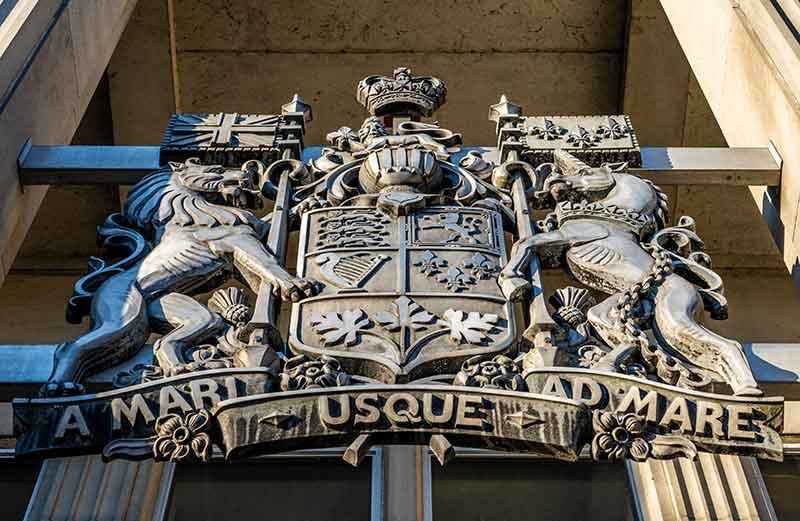
What Is Heraldry?
Heraldry developed in medieval Europe during the twelfth century. Knights participating in tournaments and military campaigns wore armor that concealed their identities. Painted shields displaying distinctive colors and symbols allowed allies to recognize one another on the battlefield.
Over time, these designs evolved into hereditary emblems passed through families. Heraldry became a sophisticated system governed by established rules concerning colors, symbols, inheritance, and composition.
In Spain, heraldry flourished during the Middle Ages and continued to evolve through the Renaissance and early modern period. Noble families, military leaders, municipal governments, religious institutions, and even some universities adopted coats of arms that reflected their history, achievements, or geographic origins.
Heraldry and the Mier Surname
Researchers studying the Mier surname occasionally encounter references to historical coats of arms associated with branches of families bearing that name. These references appear in armorial collections, noble genealogies, and regional histories.
However, careful interpretation is essential.
The surname Mier is believed to have originated as a toponymic surname connected with the village of Mier in Asturias. During the Middle Ages, individuals leaving their hometown were often identified by their place of origin, becoming known as “de Mier.” As generations passed, the “de” was frequently omitted, and Mier became an inherited surname.
Because multiple unrelated families may have adopted the surname through geographic association, several distinct Mier lineages could have existed simultaneously. Some may have achieved noble status, while others remained farmers, merchants, craftsmen, or clergy.
Consequently, the existence of a documented coat of arms for one Mier family does not establish that every Mier family shares the same ancestry.
The Difference Between Nobility and Heraldry
Another common misunderstanding is that every coat of arms represents nobility.
Although many noble families possessed heraldic bearings, not every armigerous family belonged to the highest ranks of society. Likewise, many honorable and prosperous families never possessed formal coats of arms at all.
Spanish society included numerous social classes, including:
- Grandees
- Hidalgos
- Merchants
- Artisans
- Farmers
- Clergy
- Soldiers
Some hidalgo families used coats of arms despite holding relatively modest estates, while successful merchants occasionally acquired armorial bearings through royal recognition or later ennoblement.
Genealogists therefore avoid equating heraldry automatically with aristocratic ancestry.
Asturias and Medieval Lineages
Asturias occupies a unique place in Spanish history. As the birthplace of the medieval Kingdom of Asturias, the region became home to numerous influential noble houses during the Reconquista.
Mountainous geography encouraged the development of long-established local families whose histories were intertwined with nearby villages, monasteries, and castles.
If a documented Mier lineage possessed heraldic arms, those arms would most likely reflect the history of a particular branch rather than every family carrying the surname.
Understanding local history helps researchers evaluate heraldic claims more critically.
Reading a Coat of Arms
Heraldry follows a precise language known as blazon.
Rather than describing an image casually, heraldic writers use specialized terminology to identify colors, symbols, and arrangement.
Common heraldic colors include:
- Gold (Or)
- Silver (Argent)
- Red (Gules)
- Blue (Azure)
- Green (Vert)
- Black (Sable)
Popular symbols include:
- Lions
- Castles
- Eagles
- Crosses
- Trees
- Towers
- Stars
- Shells
- Swords
Each symbol may carry historical or symbolic significance, although interpretations should be approached cautiously. Modern websites often assign elaborate meanings unsupported by historical evidence.
Family Crests vs. Coats of Arms
People frequently use the terms “family crest” and “coat of arms” interchangeably.
Technically, however, the crest is only one component of a full heraldic achievement.
The crest appears above the helmet.
The shield itself contains the principal heraldic design.
Additional elements may include:
- Helmet
- Mantling
- Motto
- Supporters
- Compartment
- Crown or coronet
Many commercial products display only the shield while describing it as a family crest.
Heraldic Research
Researchers interested in verifying heraldic information should consult reputable historical sources rather than relying exclusively on commercial websites.
Useful resources include:
- Historical armorials
- Regional nobility studies
- Academic publications
- National archives
- Municipal archives
- Specialized heraldic societies
These sources typically distinguish documented historical arms from speculative associations.
Genealogy Before Heraldry
Experienced genealogists recommend building a documented family tree before investigating heraldry.
A coat of arms has genealogical value only when researchers establish a proven connection to the historical individual or lineage that legitimately bore those arms.
Otherwise, the image serves primarily as an interesting historical artifact rather than evidence of ancestry.
The process usually proceeds in this order:
- Document each generation.
- Identify the ancestral hometown.
- Consult parish records.
- Review wills and land records.
- Examine notarial documents.
- Investigate noble or heraldic references if appropriate.
Skipping these steps often leads to incorrect conclusions.
The Role of Parish Records
As discussed in previous articles, parish registers remain the cornerstone of Spanish genealogy.
Baptisms, marriages, and burials provide documented family relationships that can eventually connect researchers to earlier generations.
Only after establishing those relationships should heraldic investigations begin.
For families researching the Mier surname, parish records in Asturias may provide the strongest evidence linking modern descendants with historical communities.
DNA and Heraldic Claims
Modern DNA testing has introduced another tool for evaluating historical family traditions.
Suppose two Mier families both believe they descend from the same heraldic lineage.
Autosomal DNA and Y-DNA testing may help determine whether they share relatively recent paternal ancestry.
Even then, documentary evidence remains essential.
DNA cannot identify a medieval knight or prove entitlement to a historical coat of arms by itself.
Visiting Asturias
Heritage travel offers an opportunity to appreciate the historical landscape associated with the Mier surname.
Visitors to eastern Asturias discover:
- Romanesque churches
- Medieval bridges
- Stone farmhouses
- Mountain villages
- Historic parish cemeteries
Although castles in the region are generally smaller than those found elsewhere in Europe, numerous defensive towers and fortified residences illustrate the medieval environment in which heraldic traditions developed.
Walking through these communities provides perspective unavailable from books alone.
Preserving Family Stories
Not every family possesses noble ancestry, and that is perfectly acceptable.
In fact, most genealogists eventually discover that their ancestors were ordinary people who lived extraordinary lives through perseverance, hard work, and devotion to family.
Farmers who cultivated mountain fields, shepherds tending flocks, blacksmiths repairing tools, fishermen working coastal waters, and mothers raising children all contributed to the history preserved today.
Their stories deserve as much attention as those of knights and nobles.
Heraldry as Historical Context
Rather than viewing heraldry as the ultimate goal of genealogy, researchers should consider it one piece of a much larger historical puzzle.
When supported by documented lineage, heraldic evidence can enrich family history by illustrating social standing, regional identity, or historical achievements.
When unsupported, it should be appreciated as an interesting aspect of medieval culture rather than proof of ancestry.
Jose Mier’s Continuing Journey
For Jose Mier in Sun Valley, researching heraldry provides another avenue for understanding the broader history of the Mier surname. Whether or not his own documented lineage ultimately connects to a heraldic family, learning about medieval symbolism, noble traditions, and Spanish history deepens appreciation for the world in which the surname developed.
The real reward of genealogy is not discovering a colorful shield to hang on the wall. It is uncovering authentic stories preserved in parish registers, archives, letters, photographs, and family memories. Those records reveal lives filled with hope, hardship, courage, and resilience—qualities that unite families across centuries.
As researchers continue tracing the Mier surname through Asturias, Spain, and the Americas, heraldry remains a fascinating chapter in that story. Used thoughtfully and supported by careful documentation, it adds historical richness to an already remarkable family journey.
External Resource
The Real Asociación de Hidalgos de España (Royal Association of Hidalgos of Spain) offers information on Spanish heraldry, nobility, genealogy, and historical research, making it an excellent starting point for understanding authentic Spanish heraldic traditions: https://www.hidalgosdeespana.es/