Jose Mier has learned that the most interesting genealogical clues are not always found in the records we expect. As an amateur genealogist living in Sun Valley, California, I spend plenty of time searching for people who share my name, but I have also discovered that the lives of our ancestors can come into much sharper focus when we look at what happened after they died. One of my favorite underused sources is the probate file: wills, estate inventories, petitions, guardianship papers, receipts and other documents created while an estate was being settled.
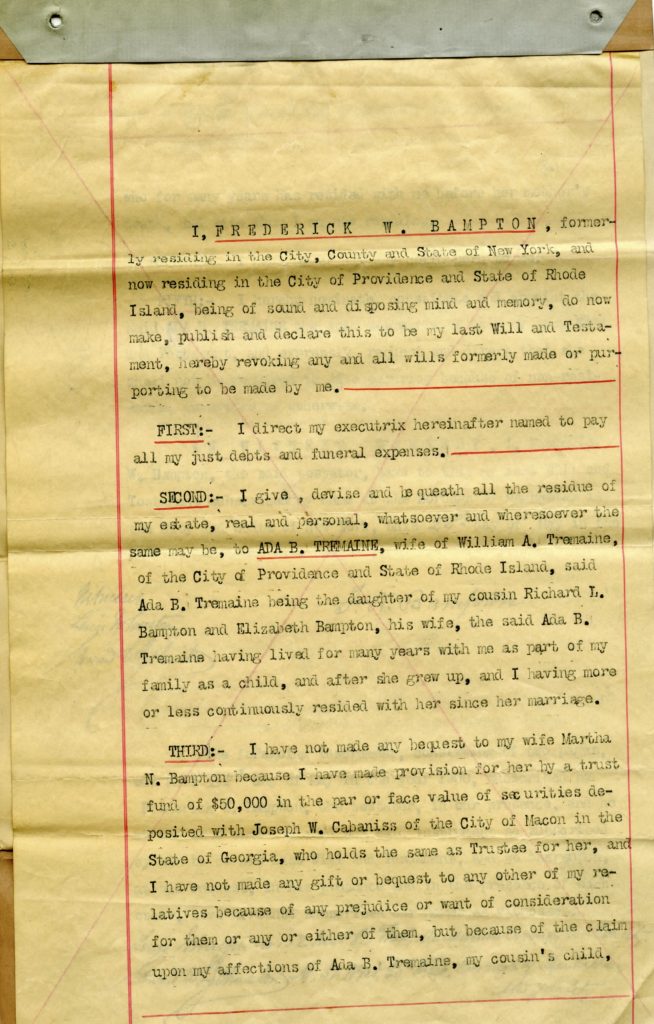
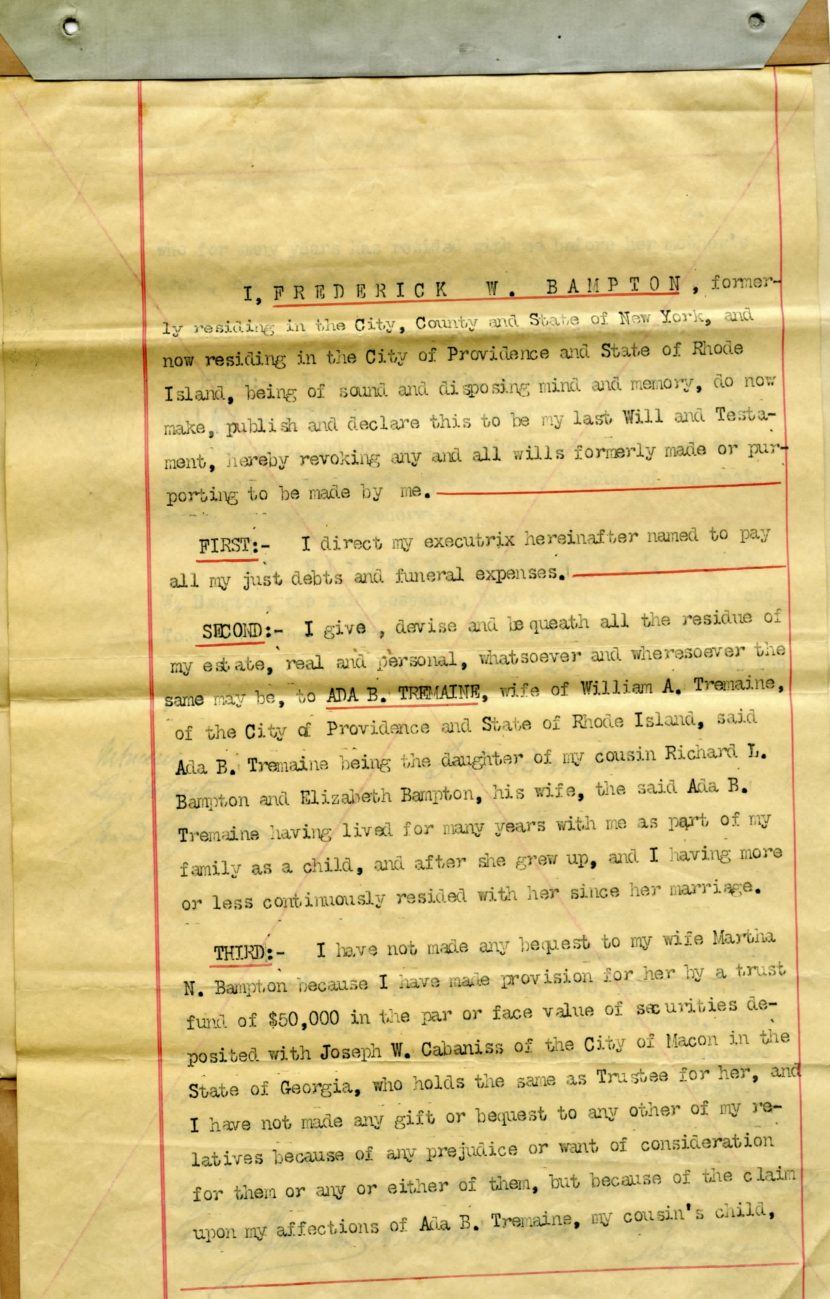
Public-domain example: the first page of Frederick W. Bampton’s 1900 will, from Providence Probate Court.
Why Probate Records Matter to Genealogists
A census can tell me that an ancestor lived in a particular house. A birth record can establish a parent-child relationship. A marriage record can connect two families. Probate records can sometimes do something even more revealing: they show how a person understood the family relationships around them at the end of life.
A will may name a spouse, children, grandchildren, siblings, cousins and other relatives. It may identify married daughters by their married names or mention a son who lives in another state. Even when a person did not leave a formal will, the estate file may contain petitions from heirs, notices to relatives, inventories of property and receipts showing who ultimately received assets.
That makes probate especially interesting when I am trying to separate two people with the same name. If I find two men named Jose Mier in the same general period, for example, a probate file that names a spouse, children and a residence can provide the extra evidence needed to determine which man is which.
Look Beyond the Will Itself
One mistake I think genealogists can make is searching only for the last will and testament. The will is important, but it is often just one item in a much larger file. Estate papers can include an inventory of possessions, accounting statements, bonds posted by administrators, correspondence, court orders and receipts from heirs.
Those seemingly mundane papers can be genealogical gold. An inventory might identify a farm, business or piece of real estate. An administrator’s accounting might reveal that money was paid to an heir living in another county. A guardianship proceeding could identify minor children and the person appointed to care for them. In other words, probate research can turn a bare name into a network of people and places.
Where to Look for Probate Records
Probate is generally a local or state-level record system rather than a federal one. The National Archives explains that wills are usually filed for probate in the county or other locality where the deceased person was residing, so researchers often need to look at county courthouses, state archives or local repositories rather than beginning with federal records.
The National Archives genealogy resources are a useful starting point for understanding where different types of historical records are held. The Archives also points researchers toward county records, state archives, libraries and other repositories when federal records are not the right place to look.
How I Would Research an Ancestor’s Estate
My first step would be to establish the person’s identity as carefully as possible. I would record the full name, approximate death date, places of residence and names of known relatives. Then I would identify the county where the person was living when he or she died. That matters because probate jurisdiction is usually tied to a locality.
Next, I would search for both a will and an estate or probate case. I would try spelling variations, initials and middle names rather than assuming the indexer recorded the name exactly as it appears in my family records. If an online index produces a promising result, I would try to obtain the original page images whenever possible. An index is a finding aid; the original document is the evidence.
Finally, I would build a list of every person mentioned in the file. I would not assume every named individual is a blood relative, because executors, witnesses, creditors, attorneys and neighbors may also appear. But each person becomes a research lead.
Probate Can Reveal Family Geography
One of the things I enjoy most about genealogy is watching a family spread across a map. Probate files can help with that. An estate may show that a parent remained in one town while adult children moved to another state. A married daughter’s name may point toward a new surname and a new community. A land description can lead to deeds, tax records and maps that place a family in a very specific location.
For someone like me, who is constantly searching for other people named Mier, that geographic information is invaluable. A name by itself is rarely enough. A name plus a date, a county, a spouse and several children is a much stronger identification.
Do Not Assume the Wealthy Left the Best Records
It is tempting to think probate research is useful only for prominent families with large estates. I do not think that is true. Even a modest estate can generate documents. A small amount of property, household goods, unpaid bills or a family disagreement can create a paper trail.
In fact, ordinary records are often what make genealogy feel real to me. A list of household possessions or a receipt signed by an heir can provide a glimpse of everyday life that a census cannot. The documents were created for practical legal reasons, but decades or centuries later they can become windows into family history.
What I Hope to Find in a Probate File
When I open a probate file, I am not simply looking for a dramatic family secret. I am looking for connections. Who belonged to this person’s household? Who inherited property? Where did the children live? Who acted as executor? Which names appear more than once? Do the ages and locations agree with what I already know?
The answers can help confirm a family tree—or force me to correct one. That is one of the lessons I have learned as an amateur genealogist. Good research is not about proving the story I want to be true. It is about following the evidence wherever it leads.
A Useful Genealogy Lesson From Old Wills
For me, probate research is another reminder that genealogy is detective work. The strongest conclusions usually come from several independent clues rather than one spectacular document. A census, a marriage record, a newspaper notice and a probate file may each contribute a small piece. Together, they can establish a convincing picture of a family.
So if your research has stalled because an ancestor seems to disappear from the records, I suggest looking sideways. Instead of searching only for births, marriages and deaths, search for what happened to the person’s property and estate. The paperwork created at the end of a life may contain exactly the relationship, place or name variation you need to move your family tree forward.
Watch: Finding Probate Records for Genealogy
For a practical introduction to finding wills, estate packets and related records, this genealogy video provides a useful companion to the research approach I have described here.
For me, the appeal of probate records is simple: they transform a name into a family. As I continue my own search for the many people who have carried the Mier name, I will keep looking beyond the obvious databases. Sometimes the most useful clue is sitting in an old courthouse file, waiting for somebody curious enough to turn the page.