Jose Mier is a name I have spent plenty of time researching, and as an amateur genealogist living in Los Angeles, CA, I have learned that family history often depends on looking beyond the familiar birth, marriage, and death certificates. One especially useful resource is also one that many family historians overlook: historical tax records. A tax list may seem like a dry government document, but it can place an ancestor in a particular community, show what property a household possessed, and help bridge the gaps between census years.
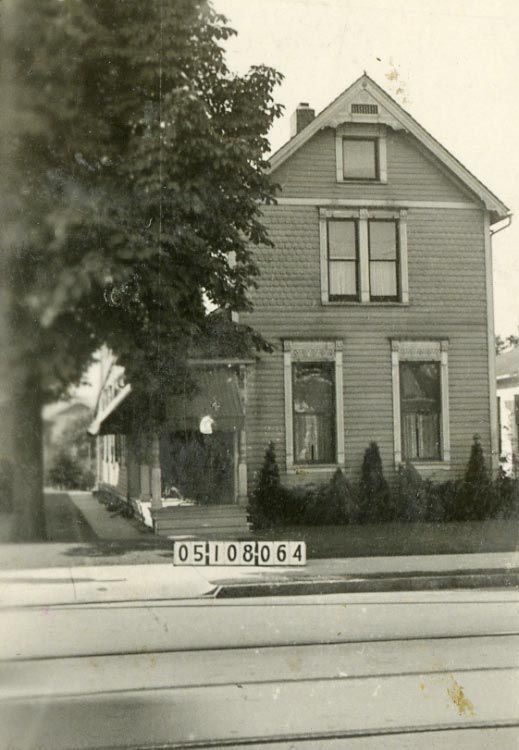
Why tax records belong in a family history search
Census schedules provide snapshots of a household every ten years, but families did not remain still between enumerations. People moved, married, inherited land, opened businesses, or died. Local tax assessors often recorded property and taxpayers more frequently than the federal census did. A sequence of annual tax entries can therefore help reconstruct the years when an ancestor’s life was changing.
Tax records also offer another way to distinguish people with common names. If several men named José, Joseph, or John Mier appear in the same county, the amount and type of property assessed, the location of a parcel, or the names of nearby taxpayers may help separate one individual from another. I find that especially important when researching a name that is shared by people in many places.
Different kinds of historical tax lists
There is no single, universal tax record. Depending on the place and period, a researcher may encounter land or real-estate assessments, personal-property lists, poll or head taxes, business and occupation taxes, excise records, and income-tax schedules. A property assessment might identify acreage, buildings, or the value assigned to a parcel. A personal-property list could mention livestock, equipment, or other taxable possessions. Some records simply name the taxpayer and the amount due, while others contain detailed descriptions.
In the United States, local and state governments created many of these records, so the format and survival of the material vary considerably. County tax books may be held by a county auditor, assessor, recorder, or historical society. Older volumes may have been transferred to a state archive, university collection, or local library. Federal tax assessment lists can also be useful for particular periods and tax programs.
Following an ancestor between census years
Suppose I locate a Mier household in a census in 1880 but cannot find the family in 1870 or 1890. A tax roll for the intervening years might show that a person with the same name was assessed in a neighboring township, perhaps with a small farm or a town lot. That clue can point me toward a deed, a probate file, a newspaper notice, or a different census district.
Repeated entries matter more than a single line. I would make a simple year-by-year table recording the taxpayer’s name, residence or district, property description, assessed value, tax amount, and any remarks. A change from one year to the next may indicate a purchase, sale, inheritance, financial setback, or move. If the name disappears, I would not immediately assume the person died; the individual may have moved, sold taxable property, become exempt, or been recorded under a different spelling.
What tax records can reveal about a household
Some assessments describe more than land. They may identify a house, barn, workshop, mill, livestock, or business assets. Those details help turn a bare name into a picture of daily life. A family listed as owning a modest property in one decade and a larger holding in the next may have prospered, inherited land, or combined resources with relatives. A sudden reduction in assessed property could reflect a sale, debt, fire, economic downturn, or another event worth investigating.
Tax lists can also expose family relationships indirectly. A widow appearing under her own name after a husband’s entries stop may suggest a death or transfer of responsibility. Two people with the same surname listed on adjacent parcels might be relatives, though that possibility needs confirmation through deeds, wills, church records, or other independent sources. Tax records rarely prove a relationship on their own; their strength is in creating leads that can be tested elsewhere.
Searching beyond the United States
Taxation records are useful in many parts of the world, not just America. In Spain, for example, historical municipal and provincial records may include property assessments, land contributions, and other fiscal documents. For someone investigating a possible connection to Asturias or another Spanish region, these materials may help locate a family in a particular parish or municipality and identify landholding patterns. Names, jurisdictions, and tax systems changed over time, so it is important to learn the local history before interpreting a record.
For families who migrated to the United States, I would use an American tax entry as a starting point rather than an endpoint. A person who appears in a California assessment may have arrived from another state or country. City directories, naturalization papers, passenger lists, and local land records can help trace the move. In Los Angeles, where families have arrived from across the country and around the world, local records can be part of a much wider migration story.
Where to find tax records
I usually begin by identifying the exact county, town, or municipality where the ancestor lived and then searching the archive or library catalog for that jurisdiction plus terms such as “tax roll,” “assessment,” “tax digest,” or “land tax.” FamilySearch’s research guide, Using Tax Records in Your Family History, is a helpful starting point for understanding the different record types and places to look. Local historical societies and county offices may have unindexed volumes that never made it onto a major genealogy website.
When searching online, I try spelling variations and initials, and I look at the surrounding pages rather than stopping at the first matching name. Tax books were often arranged by district, township, or alphabetic sequence. Neighboring entries may reveal relatives, business partners, or people who lived nearby. If an image is difficult to read, I compare several years and look for repeated handwriting patterns before deciding what a name says.
Building a more complete picture
As with any genealogical source, I record where a tax entry came from, the year it covers, and whether I viewed the original image or a transcription. I compare its details with deeds, probate files, census records, maps, and newspapers. I also keep in mind that not everyone was taxed in the same way. Renters, people with little property, women, children, clergy, and others may be absent from particular lists, depending on the law and the period. An absence is not proof that an ancestor was not there.
From my home in Los Angeles, CA, I enjoy following these small documentary clues wherever they lead. Historical tax records may not have the emotional appeal of a family photograph or a handwritten letter, but they can place a person on a specific street, farm, or parcel at a moment in time. For anyone searching for a hard-to-identify ancestor—or another person named Jose Mier—they are well worth adding to the research plan.