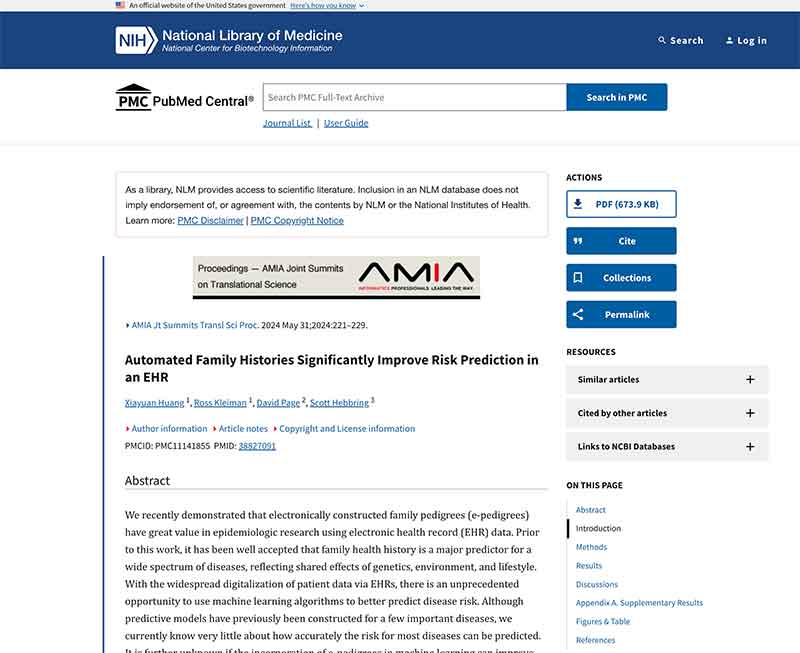
Jose Mier looks into disease prediction using family history research. Genealogy, the study of family ancestry and lineage, has become an important tool in modern medicine for predicting disease and understanding patterns of health within families. By tracing hereditary connections across generations, genealogy helps identify inherited traits, genetic disorders, and predispositions to certain illnesses. Advances in genetics and medical science have shown that many diseases are linked not only to lifestyle and environmental factors but also to inherited genetic information passed from parents to children. As a result, genealogy is now widely used in healthcare to assess disease risk, encourage preventive care, and improve early diagnosis. Check out the National Institutes of Medicine article here.
One of the primary reasons genealogy is valuable in predicting disease is that genes are inherited through family lines. Every individual receives genetic material from both parents, and this genetic information influences physical characteristics, body functions, and susceptibility to illnesses. Some diseases are caused directly by mutations in a single gene, while others are influenced by combinations of multiple genes and environmental factors. By studying family history, doctors and researchers can identify whether certain diseases appear repeatedly among relatives, which may indicate a hereditary risk.
For example, conditions such as cystic fibrosis, sickle cell anemia, and Huntington’s disease are strongly hereditary. If these disorders are present in a family’s genealogy, future generations may face a higher likelihood of inheriting them. In many cases, genetic counseling can help individuals understand the risks before having children. Couples with a known family history of inherited disorders may choose genetic testing to determine whether they carry harmful gene mutations. This demonstrates how genealogy can support informed medical and reproductive decisions.
Genealogy is also useful in predicting common chronic diseases. Conditions such as heart disease, diabetes, hypertension, obesity, and certain forms of cancer often run in families. Although lifestyle choices such as diet, exercise, and smoking play a significant role, inherited genetic factors can increase vulnerability to these conditions. For instance, individuals with close relatives who developed type 2 diabetes may have a greater chance of developing the disease themselves. Similarly, a family history of breast or ovarian cancer may indicate the presence of inherited mutations such as BRCA1 or BRCA2 genes, which significantly increase cancer risk.
Understanding genealogical patterns allows healthcare professionals to recommend earlier screening and preventive care. A person with a strong family history of colon cancer may be advised to begin colonoscopies earlier than the general population. Likewise, someone with a family history of cardiovascular disease may receive more frequent blood pressure and cholesterol monitoring. Early detection often leads to better treatment outcomes because diseases can be identified before they become severe. In this way, genealogy contributes directly to preventive medicine and public health.
Another important aspect of genealogy in disease prediction is the recognition of ethnic and population-based genetic risks. Certain hereditary diseases are more common in specific ethnic groups due to shared ancestry. For example, Tay-Sachs disease is more common among individuals of Ashkenazi Jewish descent, while sickle cell anemia occurs more frequently in people with African ancestry. Thalassemia is more prevalent among Mediterranean, Middle Eastern, and South Asian populations. By examining genealogical and ancestral backgrounds, healthcare providers can identify which genetic screenings may be most appropriate for individuals or families.
The growing popularity of genetic testing has expanded the role of genealogy in medicine. Today, many people use direct-to-consumer DNA testing services to explore their ancestry and learn about potential health risks. These tests analyze genetic markers that may indicate susceptibility to certain diseases. Although these tests cannot guarantee that a person will develop a disease, they provide valuable information about inherited risk factors. Combined with traditional family history records, DNA analysis offers a more detailed understanding of hereditary health patterns.
Despite its usefulness, genealogy as a predictor of disease also has limitations. Family history alone cannot determine with certainty whether an individual will develop a particular illness. Many diseases result from a combination of genetic, environmental, and behavioral factors. For example, a person may inherit a predisposition to heart disease but avoid developing it through healthy eating, regular exercise, and avoiding smoking. Conversely, someone without a strong family history may still develop disease due to poor lifestyle habits or environmental exposure. Therefore, genealogy should be viewed as one factor among many in assessing disease risk.
Incomplete or inaccurate family records can also reduce the reliability of genealogical information. In some families, medical histories are poorly documented or unknown due to adoption, estrangement, or lack of communication among relatives. Some diseases may have gone undiagnosed in previous generations because medical knowledge and diagnostic technology were limited in the past. Additionally, social stigma surrounding mental illness, cancer, or hereditary disorders may have caused families to hide certain conditions. As a result, obtaining an accurate family medical history can sometimes be challenging.
Ethical concerns are another important issue related to genealogy and disease prediction. Genetic information is highly personal, and there are concerns about privacy, discrimination, and psychological impact. Individuals who discover they are at high risk for a serious disease may experience anxiety, stress, or fear about their future health. There is also concern that employers or insurance companies could misuse genetic information to discriminate against people with inherited health risks. Laws such as the Genetic Information Nondiscrimination Act (GINA) in the United States were created to help protect individuals from such discrimination, but ethical debates continue as genetic technology advances.
Genealogy also plays a role in the study of mental health disorders. Research has shown that conditions such as depression, bipolar disorder, schizophrenia, and anxiety disorders can have hereditary components. A family history of mental illness may indicate increased vulnerability, although environmental factors and life experiences also contribute significantly. Recognizing hereditary patterns can help healthcare providers monitor symptoms earlier and provide appropriate support or intervention. Early awareness may encourage individuals to seek counseling, therapy, or treatment before symptoms become severe.
In addition to individual healthcare, genealogy contributes to scientific research and public health initiatives. Researchers study large family trees and population genealogies to identify genes associated with diseases. This research has led to major discoveries in understanding inherited disorders and developing targeted treatments. In some isolated populations with extensive genealogical records, scientists have successfully traced the inheritance of rare diseases across generations. Such studies help improve medical knowledge and may lead to the development of personalized medicine, in which treatments are tailored to an individual’s genetic profile.
The rise of personalized medicine represents one of the most significant ways genealogy is shaping the future of healthcare. Personalized medicine uses genetic and family history information to customize prevention strategies, diagnoses, and treatments for individuals. Instead of applying the same treatment to all patients, doctors can consider a person’s genetic background when selecting medications or therapies. For example, some individuals metabolize drugs differently due to inherited genetic variations. Understanding these variations can reduce side effects and improve treatment effectiveness. Genealogy and genetic testing therefore help create more precise and individualized healthcare approaches.
Another area where genealogy is valuable is reproductive medicine. Couples with a family history of inherited diseases may seek genetic counseling before having children. Genetic counselors analyze family histories and genetic test results to estimate the likelihood of passing disorders to offspring. This information helps couples make informed reproductive decisions and prepare for potential medical challenges. Prenatal testing and carrier screening have become important tools in reducing the incidence of certain inherited diseases and improving family planning.
Genealogy can also strengthen awareness and communication within families about health risks. When families discuss medical histories openly, younger generations become more informed about potential hereditary conditions. This awareness encourages preventive behaviors such as regular medical checkups, healthy lifestyle choices, and participation in screening programs. In many cases, simply knowing that a disease runs in the family motivates individuals to take better care of their health.
Technology has further enhanced the usefulness of genealogy in predicting disease. Digital databases, electronic medical records, and online ancestry platforms make it easier to store and analyze family health information. Artificial intelligence and bioinformatics are increasingly used to identify patterns in genetic and genealogical data. Scientists can now analyze enormous datasets to detect connections between genes and diseases more efficiently than ever before. As technology advances, the predictive power of genealogy is expected to become even more accurate and sophisticated.
However, it is important to recognize that genealogy should not lead to fatalism or the belief that disease is unavoidable. Genetic predisposition does not guarantee illness. Many people with inherited risk factors never develop disease because of healthy lifestyles, preventive care, or favorable environmental conditions. Likewise, individuals without a family history may still develop illnesses due to other causes. Therefore, genealogy should be used as a guide for awareness and prevention rather than as a definitive prediction of future health.
In conclusion, genealogy is a powerful tool for predicting disease and improving healthcare outcomes. By examining family history and inherited genetic traits, doctors and researchers can identify patterns of hereditary illness, assess disease risk, and promote early intervention. Genealogy has proven valuable in understanding inherited disorders, chronic diseases, mental health conditions, and population-specific risks. Combined with advances in genetic testing and personalized medicine, genealogical information is helping transform modern healthcare into a more preventive and individualized system. Although genealogy has limitations and raises ethical concerns, its benefits in disease prediction and health awareness are substantial. As science and technology continue to evolve, genealogy will likely play an even greater role in helping individuals and societies understand, prevent, and manage disease.